You’re Not Behind — You’re Just Renting in Today’s Market
Let’s be honest: saving for a down payment feels impossible when rent eats up half your paycheck. You’re not overspending. You’re not bad with money. You’re just living in a world where housing costs have skyrocketed, and wages haven’t kept up. But that doesn’t mean homeownership is out of reach. It just means you need a smarter, more intentional approach to saving — one that works *with* your current budget, not against it.
The good news? You don’t need to make a six-figure salary or wait years to buy a home. With the right strategy, even small, consistent moves can add up to a down payment faster than you think.
Start by Understanding What You Actually Need
One of the biggest myths about buying a home is that you need 20% down. For many loan types, that’s simply not true. First-time buyers often qualify for down payments as low as 3% with conventional loans, and some government-backed programs — like FHA, VA, or USDA loans — require even less (or nothing at all, in the case of VA loans for eligible buyers).
So before you stress about saving $80,000, do the math on what’s *realistic* for your market. If homes in your area start around $300,000, a 5% down payment is $15,000. That’s still a chunk of change, but it’s far more achievable than $60,000 — and it gives you a clear target.
Also, remember that your down payment isn’t the only cost. You’ll need funds for closing costs, which typically run 2%–5% of the loan amount. But many of these fees can be negotiated or rolled into the loan, so they don’t all have to come out of pocket.
Automate Your Savings — Even If It’s Small
When money is tight, willpower alone won’t cut it. The most effective way to save is to make it automatic — and invisible.
Set up a separate savings account just for your down payment. Then, arrange a direct deposit or automatic transfer from your paycheck, even if it’s just $25 or $50 a week. That’s less than the cost of eating out twice a month. Over a year, $50 a week becomes $2,600. In three years, it’s nearly $8,000 — without ever feeling the pinch.
The key is consistency. You’re not aiming for perfection. You’re building a habit. If you get a raise, bonus, or tax refund, add a percentage to your savings automatically before you have a chance to spend it.
Trim the Fat — But Keep Your Life
You don’t need to live like a monk to save money. But small, sustainable changes to your spending can free up real dollars.
Start by tracking your expenses for one month. Use a free app or just a spreadsheet. You’ll likely spot a few things you can adjust — like switching to a cheaper phone plan, canceling unused subscriptions, or making coffee at home three days a week instead of buying it daily. These aren’t drastic sacrifices, but they can save $100–$200 a month.
Another idea: consider a roommate, even temporarily. Splitting rent and utilities can free up hundreds each month. Or, if you’re able, move to a slightly smaller or less trendy apartment for a year or two while you save. Think of it as a short-term trade-off for a long-term gain.
Boost Your Income — Even in Small Ways
Cutting expenses helps, but the fastest way to save is to increase your income — even by a modest amount.
Look for side gigs that fit your skills: freelance writing, virtual assisting, tutoring, dog walking, or driving for a rideshare service a few nights a week. You don’t need to work 20 extra hours — just 5–7 can make a big difference.
If you’re hesitant to start a side hustle, think of it as temporary. Commit to earning an extra $300 a month for 18 months. That’s $5,400 toward your down payment — and you can walk away from the gig once you’ve hit your goal.
Also, don’t overlook simple wins: asking for a raise at work, picking up overtime, or selling things you no longer use. That old laptop, designer bag, or fitness equipment could be $200–$500 in your pocket — straight into your down payment fund.
Leverage Help That Exists — You’re Not on Your Own
Many cities and states offer down payment assistance programs for first-time buyers. These can come as grants, forgivable loans, or low-interest second mortgages. Some programs even cover 5%–10% of the purchase price — no repayment required if you stay in the home for a few years.
Eligibility varies, but often includes income limits, homebuyer education requirements, and purchasing in certain neighborhoods. A quick search for “[your city or county] + down payment assistance” can uncover programs you didn’t know existed.
Employer-assisted housing programs are another option, especially in public-sector jobs. Some employers offer housing grants or low-interest loans as a benefit — worth asking about if you’re in education, healthcare, or local government.
Start Today, Not “Someday”
- **You don’t need 20% down.** Many first-time buyers put down 3%–5%. Know your options before you set your target.
- **Automate small, regular savings.** $50 a week adds up to thousands in a year — without feeling painful.
- **Trim expenses you don’t value.** Focus on easy wins, not extreme cuts. Keep your life, but redirect money toward your goal.
- **Boost income temporarily.** A part-time gig or side hustle for 12–18 months can accelerate your timeline dramatically.
It’s Not About Perfection — It’s About Progress
Saving for a home while paying high rent isn’t easy, but it’s far from impossible. The people who make it happen aren’t lucky or rich — they’re consistent. They start small, stay focused, and use every tool available.
You don’t have to save $1,000 a month or live in a closet. You just have to start — today — with what you have. Open that savings account. Set up the transfer. Make one small spending change. These moves might feel small now, but in two years, you’ll look back and realize they were the beginning of something big.
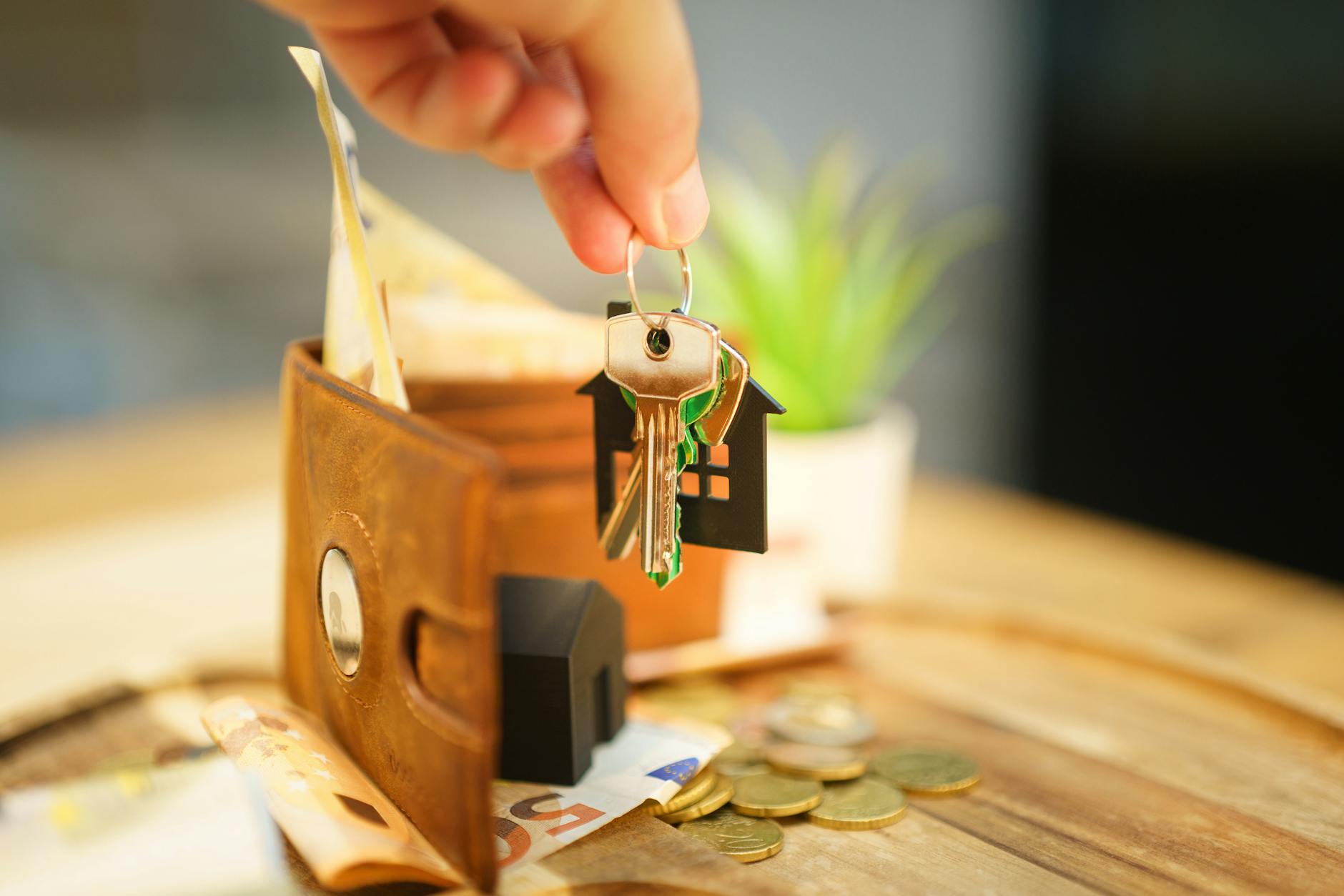
And that first key to your own front door? It’ll be worth every step.
Watch: Think you need a huge down payment to buy a home? Not always.
Ready to Start Your Home Journey?
When you're ready to buy or sell, Welcome Home Referrals connects you with top agents in any market — free, with 15% cash back at closing.
Find a Top Agent →Photo by Jakub Zerdzicki • Published May 25, 2026